
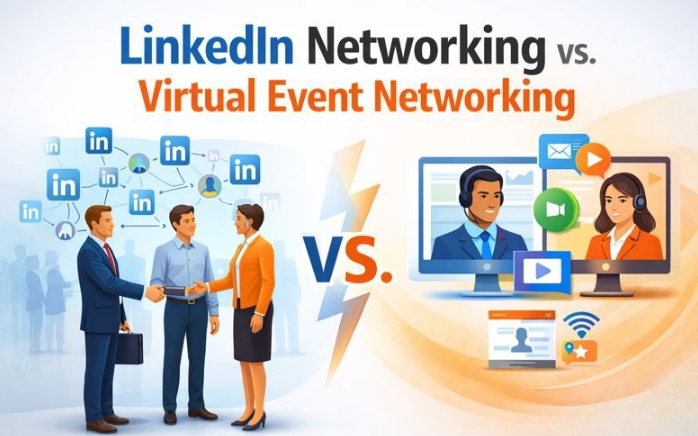
LinkedIn Networking vs Virtual Event Networking: Which Generates More Real Clients in 2026?
Networking has always been one of the most powerful career growth strategies and LinkedIn Networking vs Virtual Event Networking has been mostly a comparison questions many beginners is asking everyday.
Research suggests that up to 85% of job opportunities are filled through networking connections rather than traditional job applications.
Career networking research
.
I have been studying digital networking for years. Long before many professionals began treating online relationships as real business opportunities.
Back then most people believed networking only worked in conference halls, business breakfasts, and handshake meetings.
But something changed.
Remote work expanded. Virtual events exploded. Platforms like LinkedIn evolved into powerful relationship engines.
And suddenly a new question emerged:
LinkedIn Networking vs Virtual Event Networking — which one actually generates real clients?
This is not a simple question. And the answer is definitely not something an AI overview can summarize in two sentences.
Because when we talk about networking results, we are really talking about:
- Trust building
- Conversation depth
- Timing
- Human psychology
- Relationship momentum
In this guide I will break down real strategies, frameworks, case studies, and experiments comparing LinkedIn Networking vs Virtual Event Networking.
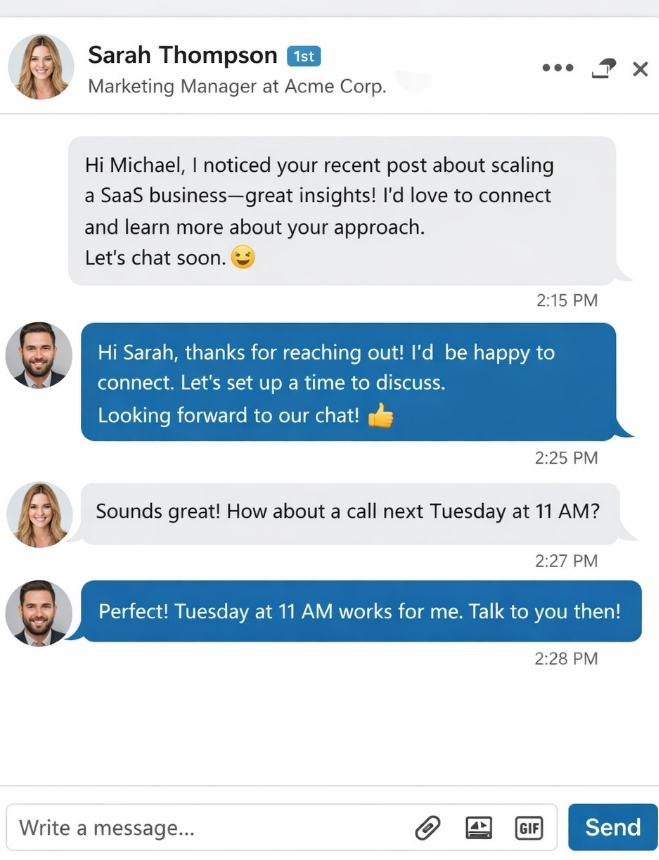 Example of LinkedIn Networking Conversation
My Early Experiment With Online Networking
Years ago I decided to run a small personal experiment because I kept hearing professionals debate whether online networking could ever replace traditional networking conversations.
Instead of relying on theories or opinions, I wanted to observe real outcomes by testing two different networking approaches at the same time.
- Cold networking on LinkedIn
- Attending structured virtual meetups
My goal was very simple. I was not chasing vanity metrics like connection numbers or profile views. I wanted real conversations that could eventually turn into meaningful professional opportunities.
I approached the experiment with patience because networking is rarely about instant results. Relationships need time, context, and a genuine reason to continue the conversation.
When the early results started appearing, I realized something interesting that many professionals rarely talk about when comparing LinkedIn networking vs virtual event networking.
LinkedIn generated significantly more connections because sending connection requests is easy, fast, and scalable when compared to attending live networking conversations.
However, something different happened during virtual events. The conversations felt more natural, longer, and far more personal than the short messages exchanged through LinkedIn inboxes.
That difference became the foundation for understanding the real dynamic behind LinkedIn networking vs virtual event networking and why both approaches behave very differently in real professional environments.
The Core Difference Most Professionals Ignore
Most professionals believe networking success comes from collecting as many connections as possible, assuming that larger contact lists automatically create more opportunities in the long run.
But after years of observing real networking behavior, I realized something important. Networking is rarely about volume alone. It is actually about relationship momentum.
LinkedIn is extremely powerful when it comes to generating connection volume because it allows professionals to discover, follow, and connect with thousands of people across industries.
Virtual events operate very differently. Instead of focusing on connection numbers, they create conversation momentum through real-time interaction, shared experiences, and natural discussions.
Both approaches are valuable, but they serve different stages of professional relationship building and should be used strategically rather than treated as competing networking methods.
The Networking Conversion Framework
After observing hundreds of networking interactions across LinkedIn conversations, virtual meetups, and professional communities, I eventually developed a simple framework to understand how relationships evolve.
I call this model the 4-Stage Relationship Conversion Framework because it describes the natural path most professional connections follow before they become real opportunities.
- Stage 1: Visibility
- Stage 2: Engagement
- Stage 3: Trust
- Stage 4: Opportunity
What makes this framework useful is that LinkedIn networking and virtual event networking behave very differently at each stage of this relationship-building process.
Stage 1 – Visibility
LinkedIn dominates this stage.
Your profile acts like a digital business card that can reach thousands of professionals without any meeting taking place.
Strategies like the ones explained in
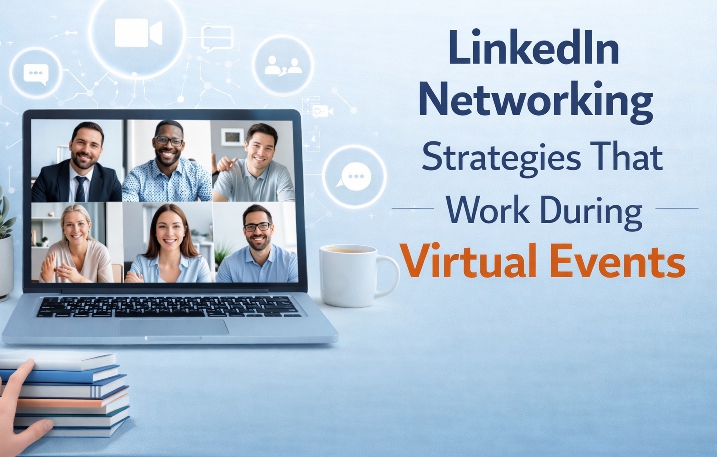
LinkedIn Networking Strategies That Work During Virtual Events
show how visibility can compound when used strategically.
LinkedIn has become the largest professional network in the world. According to industry data, the platform now has over 1 billion members and continues to grow rapidly.
My research shows LinkedIn has more than 1.2 billion members globally, making it the largest professional networking platform available today.
Source: LinkedIn statistics report
.
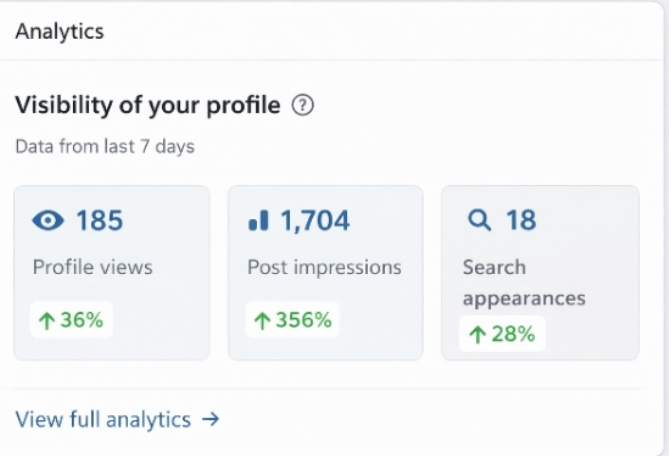 LinkedIn Profile Visibility Metrics
Stage 2 – Engagement
This is the stage where networking begins to move beyond simple visibility and starts turning into actual interaction between professionals who are beginning to recognize each other.
At this point the conversation becomes more meaningful, because engagement determines whether a connection will remain passive or eventually grow into a real professional relationship.
LinkedIn engagement often appears in simple and familiar forms that many professionals see every day when they interact with posts or connection updates.
- Likes
- Comments
- Connection requests
While these actions are useful signals of interest, they usually represent very light interaction that does not always lead to deeper conversation or long-term professional relationships.
Virtual event engagement, however, operates in a very different environment where professionals interact in real time rather than through delayed messages or passive social reactions.
- Live conversation
- Immediate feedback
- Shared context
Because participants are present at the same moment, conversations develop naturally, and people can respond instantly, clarify ideas, and build rapport much faster than asynchronous messaging allows.
This difference creates a powerful psychological advantage for virtual networking environments because real-time interaction accelerates familiarity, comfort, and trust between professionals who might otherwise remain distant connections online.
Stage 3 – Trust
Trust is not something that magically appears after sending connection requests or accumulating a long list of LinkedIn contacts; it must be intentionally built over time through meaningful interactions.
In my experience, trust grows primarily through conversation, where participants share insights, ask questions, and demonstrate expertise in ways that make the relationship feel genuine and valuable.
This is exactly where virtual networking platforms show their true power, allowing professionals to connect in real time, exchange ideas, and gradually develop mutual confidence and reliability.
Many professionals underestimate just how effective well-structured virtual events can be, especially when they are thoughtfully hosted to encourage authentic dialogue and provide shared experiences that build credibility.
When virtual events are run correctly, attendees leave feeling they know and trust each other, which is far more impactful than the shallow interaction often found in generic online connections.
The framework described in
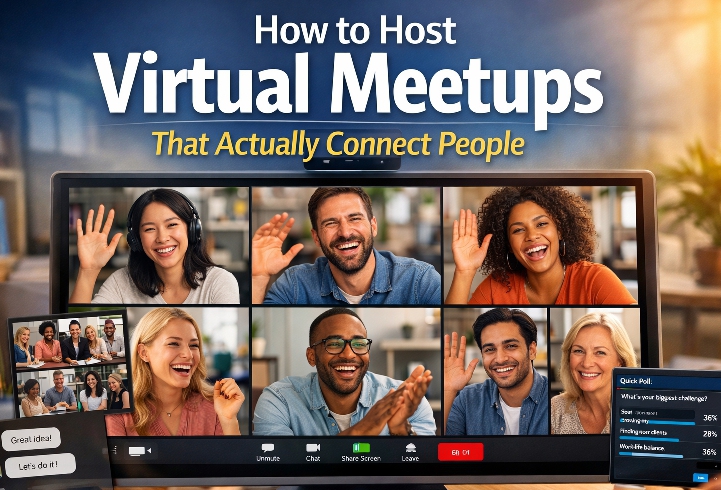
How to Host Virtual Meetups That Actually Connect People
shows why well-designed online gatherings produce stronger professional relationships.
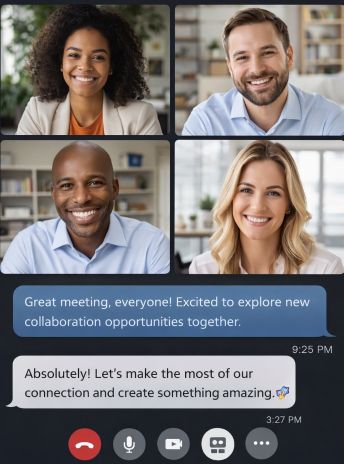 Virtual Meetup Conversation Example
Stage 4 – Opportunity
This is the stage that most I focus on because it is where all the effort, time, and conversations begin to translate into tangible results that actually matter in my careers.
At this point, real opportunities start to appear—opportunities that can affect your business, professional reputation, and long-term career trajectory if approached strategically and thoughtfully.
- Clients – new customers who are genuinely interested in your services and are ready to engage in real business conversations
- Partnerships – collaborations with other professionals or organizations that expand your reach and enhance credibility within your industry
- Projects – meaningful assignments or initiatives that arise directly from networking conversations and shared professional goals
- Career moves – job offers, promotions, or invitations to join teams based on relationships cultivated over time
This is also the stage where the comparison between LinkedIn networking vs virtual event networking becomes complex, because each platform delivers opportunities in different ways depending on your strategy and engagement style.
LinkedIn can generate numerous potential leads and visibility-driven opportunities, but virtual events often produce higher-quality connections that are more likely to convert into tangible professional outcomes.
Case Study 1 – The LinkedIn Heavy Networker
One professional I studied had painstakingly built a network of over 12,000 LinkedIn connections, reaching people across multiple industries and geographies in a very short period of time.
On paper, those numbers looked impressive, signaling strong visibility and potential influence within their professional circles. Many colleagues were impressed just by the sheer size of the network.
However, when I asked how many of these connections had actually converted into paying clients or meaningful professional collaborations, the answer was surprisingly small, almost negligible compared to the network size.
The main reason for this discrepancy became clear after reviewing message histories, engagement patterns, and conversation depth: connections were largely shallow, limited to casual acceptances without follow-up or personal interaction.
In other words, while visibility existed in the form of a large connection count, genuine trust was mostly absent, which significantly reduced the likelihood of real business outcomes.
This case study highlights a key lesson: LinkedIn alone can help you grow a network quickly, but without meaningful engagement, the relationships rarely turn into opportunities that matter.
Case Study 2 – The Virtual Event Strategist
Another professional I observed took a completely different approach compared to the typical LinkedIn-heavy strategy, focusing on quality interactions rather than simply growing connection numbers.
Instead of dedicating all his time to LinkedIn growth alone, he strategically attended and personally hosted structured virtual networking sessions, carefully designed to foster meaningful conversation and engagement.
Many of these sessions were organized following the detailed process explained in
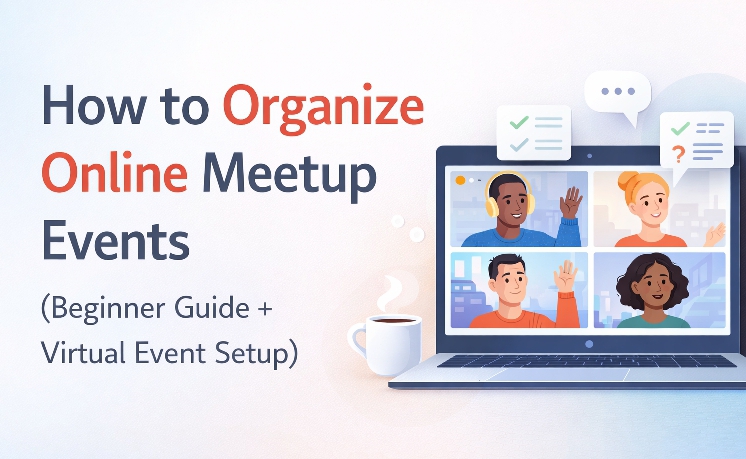
Step-by-Step Guide to Organizing Your First Online Meetup
, which emphasizes preparation, moderation, and follow-up to maximize trust and connection development.
Within just six months, his overall network remained smaller in size than typical LinkedIn-heavy strategies, but each relationship he nurtured was deeper, more engaged, and far more likely to result in professional collaboration.
The quality of his connections allowed him to move beyond simple acquaintance-level interactions, creating strong rapport and trust that naturally led to productive business conversations over time.
Remarkably, three of these well-nurtured relationships eventually turned into real business contracts, demonstrating that investing in structured virtual networking can produce tangible, high-value opportunities that far outweigh mere volume.
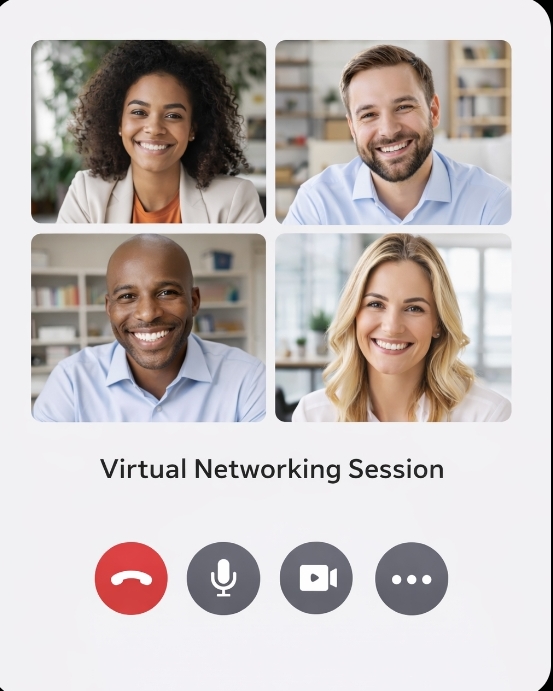
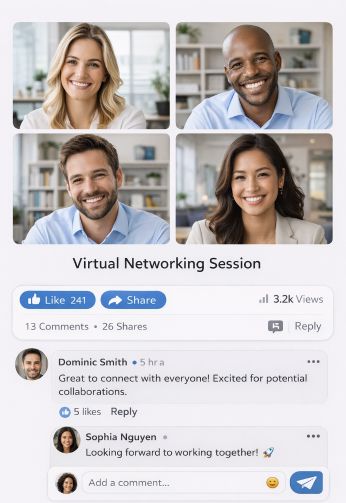 – Virtual Networking Session Example
Experiment: 100 Networking Interactions
To gain real insight into the differences between LinkedIn networking vs virtual event networking, I decided to conduct a simple, hands-on experiment tracking actual outcomes over a defined period.
My goal was to measure not just superficial metrics like connection counts or profile views, but the depth and quality of engagement that could realistically lead to professional opportunities.
I carefully tracked 100 interactions from each channel. For LinkedIn, I sent personalized connection requests to professionals I thought might have overlapping business interests or potential collaboration opportunities.
LinkedIn Results
The results were interesting and highlighted both the strengths and limitations of LinkedIn networking. While it allowed me to reach a large number of people quickly, conversion into meaningful conversations was limited.
- 100 connection requests – demonstrating LinkedIn’s scalability for growing a network rapidly
- 38 replies – showing moderate engagement, mostly simple acknowledgment of the connection request
- 14 conversations – deeper exchanges where I could discuss potential collaborations or shared interests
- 2 real opportunities – genuine professional outcomes, such as new clients or project leads resulting from initial connections
Analyzing these results helped me understand that LinkedIn is excellent for visibility and initiating connections, but alone it often lacks the momentum necessary to cultivate strong trust and high-value opportunities.
Virtual Event Results
For virtual events, I tracked 40 participants across several structured sessions I attended and hosted, carefully observing the quality of interactions and engagement patterns.
From these 40 participants, I managed to engage in 26 meaningful conversations where we discussed potential collaborations, shared resources, and explored opportunities for professional growth together.
Out of these conversations, 12 led to follow-ups, such as scheduling one-on-one meetings, exchanging detailed project proposals, or connecting over additional virtual sessions to maintain momentum.
Ultimately, 5 of these interactions converted into real business opportunities, including client projects, partnerships, and collaborative initiatives that were directly attributable to the structured virtual event environment.
This experiment highlights a key insight: while LinkedIn remains powerful for visibility and generating leads, virtual events often produce higher-quality relationships that are far more likely to convert into tangible professional outcomes.
Studies show that 89% of marketers say LinkedIn generates leads for their business, and many consider it the most effective platform for B2B marketing.
LinkedIn marketing statistics research
.
This does not mean that virtual networking will always outperform LinkedIn or other platforms in every scenario, because outcomes depend heavily on context, audience, and strategy applied.
However, this experiment clearly reveals an important lesson that many professionals often overlook when evaluating networking channels: the depth and quality of each conversation truly determines long-term results.
In fact, these findings reinforce a simple principle I have observed repeatedly: conversation quality, meaningful engagement, and follow-up interactions matter far more than sheer connection quantity when building professional relationships.
Decision Guide: Which Strategy Should You Choose?
After years of observation I believe the smartest professionals do not choose between LinkedIn networking vs virtual event networking.
They combine them strategically.
Use LinkedIn When:
- You want visibility
- You want to grow your professional audience
- You want to research people before meeting them
Use Virtual Events When:
- You want deeper conversations
- You want faster trust building
- You want collaborative opportunities
The Hybrid Networking Strategy
The real opportunity for professionals in 2026 lies in combining both LinkedIn networking and structured virtual events into a single hybrid strategy that maximizes both visibility and meaningful engagement.
When implemented correctly, this hybrid approach works like a well-designed funnel, guiding connections from initial discovery to deep conversations, trust-building, and ultimately converting relationships into tangible professional opportunities.
- Use LinkedIn for discovery – identify and connect with potential collaborators, clients, and industry peers while carefully curating your profile to highlight your expertise and value.
- Invite connections to structured virtual conversations – leverage virtual events to move your relationships from passive connections into active engagement with live discussions and shared experiences.
- Build trust through interaction – focus on meaningful dialogue, follow-ups, and authentic exchanges that create credibility and reliability, which are essential for any long-term professional relationship.
- Convert relationships into real opportunities – transform trusted connections into actionable outcomes such as clients, partnerships, projects, or career advancement by nurturing the relationship strategically over time.
This hybrid networking funnel allows you to combine LinkedIn’s scale and visibility with the high-quality engagement of virtual events, ensuring both reach and depth in your professional networking strategy.
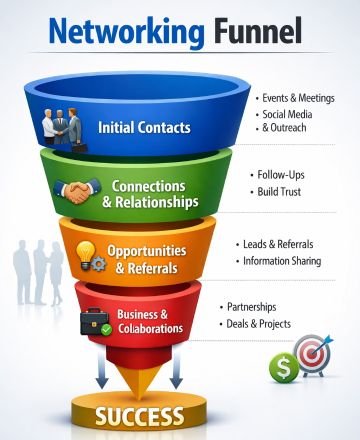 – Networking Funnel Diagram
The Role of Virtual Platforms
Not all online events are created equal, and I quickly realized that the platform you choose can significantly affect the quality and outcome of your networking efforts.
Choosing the right virtual platform matters because some tools are built for passive viewing, while others are designed specifically to foster active engagement, live conversation, and real relationship-building.
Several networking-focused tools and platforms that I have tested and observed in real scenarios are discussed in
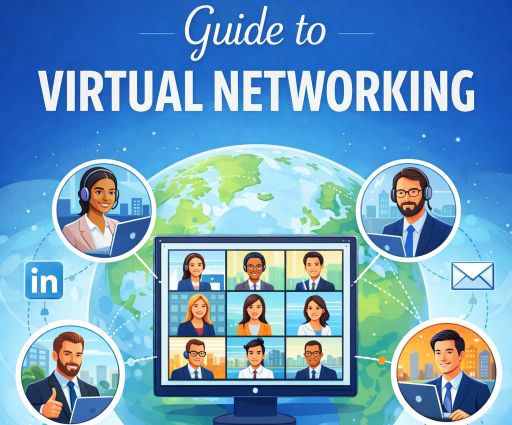
Top 5 Online Meeting Platforms for Virtual Networking in 2026
, which I found particularly useful for structured interactions and high-quality engagement.
These platforms enable structured interaction instead of passive webinar experiences, allowing participants to ask questions, interact with small groups, and build trust more effectively than traditional online meetings.
Selecting the right virtual environment is critical for achieving real networking outcomes, because the technology directly influences conversation momentum, trust-building, and ultimately the likelihood of converting connections into opportunities.
Expert Opinion: The Future of Networking
If you ask experienced professionals who have navigated multiple networking platforms over the years, most agree on one key insight: the future of professional networking is evolving rapidly and strategically.
Many experts predict that hybrid networking will dominate the next decade, combining the expansive discovery capabilities of platforms like LinkedIn with the deeper engagement opportunities offered by structured virtual events.
LinkedIn will continue to serve as the primary discovery engine, allowing professionals to identify potential collaborators, clients, and partners at scale while maintaining visibility across industries and geographies.
Meanwhile, virtual events will increasingly act as the relationship engine, providing structured, interactive environments where trust, rapport, and authentic engagement can be cultivated far more effectively than through asynchronous online interactions alone.
This expert consensus reinforces the key takeaway: success in professional networking in 2026 and beyond depends on intentionally combining both channels to balance reach, engagement, and conversion into real opportunities.
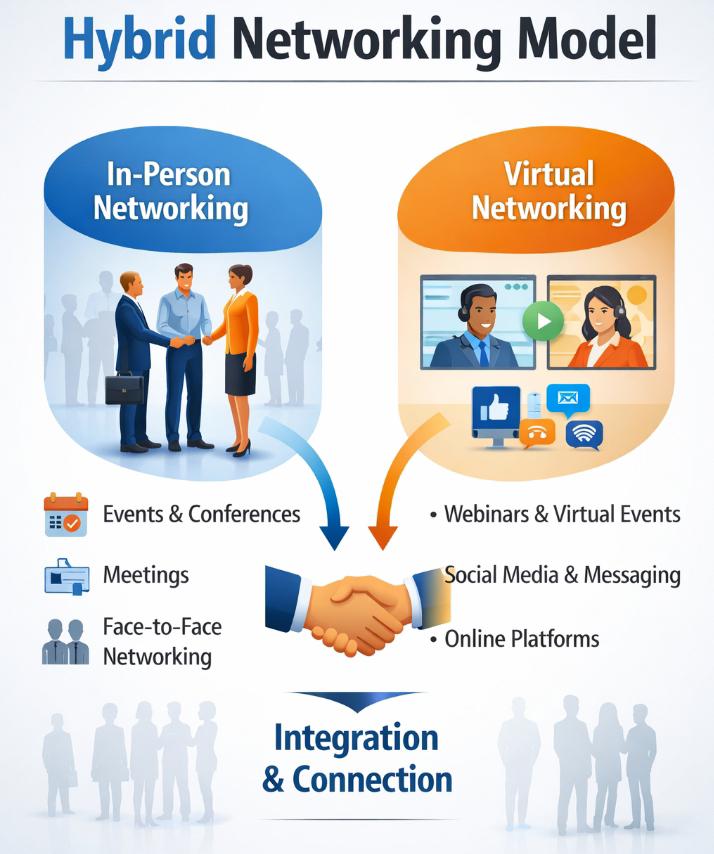 – Hybrid Networking Model
Final Thoughts
Networking today is no longer simply about collecting contacts or increasing your LinkedIn numbers. Real success comes from creating meaningful professional relationships that last and deliver value.
The true power lies in intentionally combining LinkedIn networking with structured virtual events, because together they form a system that balances visibility, engagement, and trust-building for long-term growth.
LinkedIn networking vs virtual event networking is not a competition between platforms; instead, it is a complementary approach where each channel serves a unique purpose in your professional journey.
When these approaches are used together, they create a powerful network ecosystem that delivers four critical outcomes: visibility, conversation, trust, and opportunity—each reinforcing the other over time.
- Visibility – helping you discover and connect with the right professionals
- Conversation – engaging meaningfully to build rapport and understanding
- Trust – cultivating credibility and reliability through consistent interaction
- Opportunity – transforming relationships into tangible professional results such as clients or partnerships
This combination ultimately generates real clients and professional outcomes that matter, and separates those who simply collect connections from those who create lasting professional impact.
The professionals who understand this principle will build networks that grow not only in size but in real value and influence, positioning themselves for long-term success.
I’d love to hear your thoughts: How are you currently using LinkedIn or virtual events to build meaningful connections? Share your experiences and strategies in the comments below, so we can learn from each other and grow our networks together.
I’ve tried both approaches over the last year and your comparison really reflects what I experienced. LinkedIn helped me start conversations with people in my industry, but the real relationships happened during live virtual events where we could actually talk and exchange ideas. One client I currently work with first noticed my LinkedIn comment during a webinar discussion, so I can see how combining both methods works well.
Interesting breakdown of the differences. In my case LinkedIn has been useful for keeping connections active after events. I met someone during an online startup meetup earlier this year, and we stayed in touch by commenting on each other’s posts. That ongoing interaction eventually led to a collaboration project. So I agree that LinkedIn works best when it supports conversations started during real events.