Why Is My Lop Rabbit Not Eating? 7 Causes and What To Do
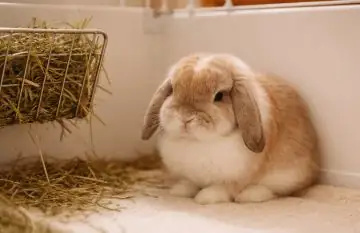
I remember the morning I walked over to my Holland Lop’s enclosure and found her hay rack untouched. The pellets were full. She was sitting in the corner, ears flat, not moving much. My stomach dropped immediately. A lop rabbit not eating is one of the scariest things an owner can experience — and for good reason.
If you’re asking “why is my lop rabbit not eating?” right now — I need you to keep reading. Because the answer matters more than you think, and the window to act can be shorter than most owners realise.
I’ve been through this more than once. I’ve sat on the floor next to my rabbit at midnight, Googling symptoms and feeling helpless. What I’ve learned from those experiences — and from a lot of vet conversations — is what I’m sharing here.
This is not a generic rabbit article. Every single cause I cover here is something I’ve either personally dealt with, observed closely, or researched specifically because of my own Lop’s health events.
🚨 First — Why a Lop Rabbit Not Eating Is Always Urgent
Unlike dogs or cats, rabbits cannot go hours without food without serious risk. Their digestive system needs constant movement. When a Lop rabbit stops eating, the gut can begin to slow down within hours.
This slowdown is called GI stasis — and it can turn life-threatening in under 24 hours if ignored. I cannot stress this enough: a lop rabbit not eating for more than 6–8 hours needs attention immediately.
The first thing I always do is observe for 30 minutes without disturbing them. Check the litter box for droppings. Check if water has been touched. This gives me a baseline before I decide how fast to act.
If your Lop rabbit is not eating and has produced zero droppings in 4+ hours — this is a potential GI stasis emergency. Contact a rabbit-savvy vet immediately. Do not wait overnight.
🔍 7 Real Reasons Your Lop Rabbit Is Not Eating
These are the seven causes I’ve personally investigated, experienced, or had confirmed by my vet. I’m going to cover each one properly — not just a bullet list — because understanding the “why” helps you act correctly and quickly.
GI Stasis — The Most Dangerous Cause
GI stasis is the condition where your rabbit’s digestive system slows down or stops completely. It is the number one reason a lop rabbit is not eating and it is genuinely life-threatening.
I’ve had my rabbit go through a mild GI episode twice. Both times the early sign was the same — hay rack untouched in the morning, fewer droppings overnight, and a rabbit who seemed uninterested in everything.
The gut of a rabbit never fully rests. It needs constant fibre input to keep moving. When that input drops — whether from stress, pain, or illness — the gut slows, gas builds up, and the pain from that gas makes the rabbit eat even less.
It becomes a terrible cycle: not eating → gut slows → gas and pain → even less eating. Every hour matters.
- →No droppings or very small, dry, strung-together droppings
- →Rabbit sitting hunched with belly pulled in
- →Grinding teeth (bruxism) — a sign of pain
- →Refusing hay, pellets, and even favourite treats
- →Distended, hard, or gurgling belly
- →Lethargy — not moving, not reacting normally
Call a rabbit-savvy vet immediately if you suspect GI stasis. Do not try to wait it out. While waiting for your appointment, gentle belly massage, encouraging movement (letting them free-roam), and keeping them warm can help maintain gut motility.
Dental Pain — The Silent Culprit
If you’re asking why is my lop rabbit not eating but still seems otherwise alert, dental pain is the first thing I’d investigate. Lops are genetically prone to dental disease because of their compressed skull shape — and it’s one of the most commonly missed causes.
I discovered my rabbit had a beginning molar spur when I noticed she was picking up hay, chewing once, dropping it, and walking away. She wasn’t refusing food out of pickiness. She was trying to eat but it hurt.
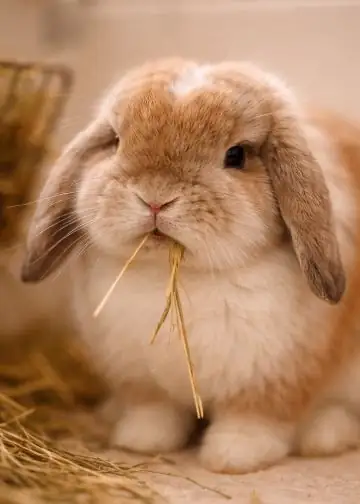
Rabbit teeth grow continuously throughout their life. Without enough hay to grind them down properly, molar spurs develop — sharp points on the back molars that cut into the tongue or cheek with every chew.
- →Picking up food and dropping it repeatedly
- →Preferring soft foods over hay (hay hurts to chew)
- →Wet chin or drooling (saliva pooling from not swallowing)
- →Weight loss over weeks with no obvious reason
- →Eye discharge (molar roots near tear ducts)
Dental issues require a vet examination — ideally under sedation to fully check the back molars. The fix is usually a dental filing procedure. Long-term prevention is always unlimited hay.
Stress and Anxiety — Emotional Shutdown
This one surprised me when I first learned about it. My rabbit stopped eating for almost a full day after I rearranged her enclosure. I thought I was improving her space. She experienced it as a complete invasion of her territory.
Rabbits are prey animals. Their sense of safety is deeply tied to their environment. Any sudden change — loud noises, new pets, visitors, being moved to a different room, even a new litter brand — can trigger a stress response that shuts down appetite.
If you’re wondering why is my lop rabbit not eating and nothing health-related seems wrong, think carefully about what changed in the 24–48 hours before it started.
- →Moving house or moving the rabbit’s enclosure
- →New pets in the home (especially dogs or cats)
- →Loud, sustained noise — construction, music, fireworks
- →A bonded rabbit companion passing away or being separated
- →Rough handling or a frightening experience
- →Sudden change in daily routine or owner’s schedule
Minimise disturbances. Keep the environment as familiar as possible. Sit near your rabbit quietly — don’t try to pick them up. Offer their favourite safe greens by hand. Most stress-related food refusal resolves within 12–24 hours as long as the stressor is removed.
Weather and Temperature — The Overlooked Factor
I had never connected weather to my rabbit’s appetite until one brutally hot summer. My rabbit barely touched her food for two days during a heatwave. She was drinking water — but eating almost nothing.
It turns out temperature is a massive and widely overlooked reason why a lop rabbit is not eating. rabbits are extremely sensitive to heat. Their ideal temperature range is between 15–21°C (60–70°F). Anything above 25°C (77°F) is dangerous territory.
When a rabbit overheats, their appetite drops dramatically. Their body is trying to reduce metabolic activity to manage internal temperature. It’s survival mode.
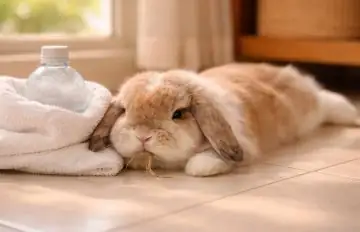
Cold can also suppress appetite, but heat is the bigger immediate risk. During summer, I now keep a frozen water bottle wrapped in a towel in my rabbit’s enclosure, and I monitor the room temperature closely.
| Temperature | Risk Level | Appetite Impact |
|---|---|---|
| Below 10°C (50°F) | Moderate | Slight reduction, more hay needed |
| 15–21°C (60–70°F) | Ideal | Normal appetite, no concerns |
| 22–25°C (72–77°F) | Watch Closely | Slight appetite drop possible |
| Above 28°C (82°F) | Dangerous | Significant appetite loss, heatstroke risk |
Keep indoor temperatures below 25°C. Offer frozen (not ice cold) ceramic water bowls. Place a frozen bottle wrapped in a cloth in the enclosure. Mist their ears lightly with cool water — ears are where rabbits release heat. Never leave your rabbit in a hot car or conservatory.
Respiratory Infection or Illness — When They’re Sick
Just like humans lose their appetite when they’re unwell, a sick rabbit stops eating. Respiratory infections, bladder infections, ear infections — any illness can cause a lop rabbit to stop eating as their body redirects energy toward fighting the problem.
Lops are specifically prone to upper respiratory infections (snuffles) because of their compressed skull. I noticed my rabbit eating less during what turned out to be a mild snuffles flare-up — she was also sneezing occasionally and had a slightly runny nose.
The challenge with illness-related appetite loss is that the symptoms can be subtle at first. A rabbit not eating combined with any other symptom — sneezing, nasal discharge, laboured breathing, tilted head — always means vet visit.
- →Sneezing, nasal discharge, or crusty nose
- →Head tilt or loss of balance (ear infection / E. cuniculi)
- →Cloudy or squinting eyes
- →Straining to urinate or passing blood in urine
- →Laboured or noisy breathing
Any combination of lop rabbit not eating + any other symptom on the list above = vet visit. Most infections are treatable with antibiotics (rabbit-safe ones — never use penicillin-based antibiotics on rabbits). Early treatment dramatically improves outcomes.
Picky Eating or Hay Refusal — Less Serious But Still Important
Not every case of a lop rabbit not eating is a medical emergency. Sometimes — and I’ve been here many times — the issue is simply that the hay is old, the routine changed, or your rabbit decided today is the day they’re boycotting pellets.
My rabbit went through a phase of refusing any hay that wasn’t orchard grass. I’d fill the rack with timothy and she’d look at it like I’d offended her personally. The moment I switched brands, she was back to eating normally within hours.
This kind of selective refusal — where they’re eating some things but not others — is very different from full appetite loss. If your rabbit is still drinking water and producing normal droppings, it’s likely a preference issue rather than a health crisis.
- →Hay that’s too dusty, old, or yellowed
- →Switching hay brands or type without gradual introduction
- →Too many pellets filling them up before hay time
- →Greens that were too cold from the fridge
- →Boredom with the same food rotation every day
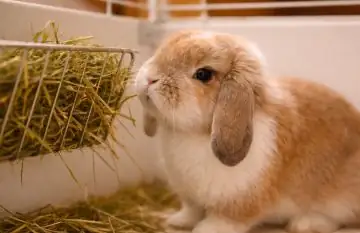
Replace the hay with a fresh batch. Try a different type (orchard grass, meadow hay, oat hay). Temporarily reduce pellets to increase hay motivation. Offer greens at room temperature, not cold. If they resume eating within a few hours, you likely had a preference issue, not a health issue.
Pain From Injury or Internal Issue
Rabbits hide pain exceptionally well — it’s a survival instinct from being a prey animal. By the time a rabbit shows visible signs of pain, they’ve often been suffering for a while. This is one of the reasons why a lop rabbit not eating can be so alarming — it’s sometimes the only outward signal that something internal is wrong.
Bladder stones, uterine cancer (in unspayed females), intestinal blockages, and even a sprained leg or back injury can all cause appetite loss. My vet once told me: “If a rabbit stops eating, assume there’s pain involved until proven otherwise.”
That advice has stayed with me. Every single time my rabbit refuses food for more than 4 hours, I approach it from the angle of pain first, preference second.
- →Grinding teeth loudly (bruxism — distinct from quiet happy tooth grinding)
- →Unusual posture — stretched out flat, or hunched in a tight ball
- →Flinching or grunting when you touch their belly or back
- →Sitting in the litter box longer than usual
- →Not wanting to be touched when they’re usually social
Do not attempt to massage an abdomen that feels hard, distended, or causes flinching. Get to a vet. Pain-related appetite loss in rabbits is not something to wait out. Unspayed female Lops over 3 years old are at particularly high risk of uterine cancer — another strong reason to spay early.
🧭 Quick Decision Guide: What To Do Right Now
I know how it feels in that moment — your rabbit is not eating and you’re trying to figure out if it’s serious or if you’re overreacting. Here’s the framework I use every single time.
| Observation | Droppings? | Action |
|---|---|---|
| Not eating < 2 hours | Normal | Monitor — check again in 1–2 hours |
| Not eating 2–6 hours | Fewer than normal | Watch Closely — offer hay/greens, assess for stress |
| Not eating 6–12 hours | Very few or none | Call Vet — book emergency appointment |
| Not eating 12+ hours | None | Emergency Vet NOW |
🏠 What I Do at Home While Waiting for the Vet
When I’m waiting for a vet appointment and my rabbit is not eating, I follow these steps. None of these replace veterinary care — but they can help maintain gut movement while you wait.
- Encourage movement. Let your rabbit free-roam in a safe space. Physical movement stimulates gut motility. A rabbit who keeps walking around has a better chance of keeping things moving than one sitting still.
- Offer their absolute favourite treat. A tiny piece of fresh herb or a fragment of fruit. Not to replace food — but to assess their interest level and stimulate their appetite signal.
- Keep them warm but not hot. A comfortable temperature (18–21°C) helps maintain gut function. Avoid draughts or cold floors.
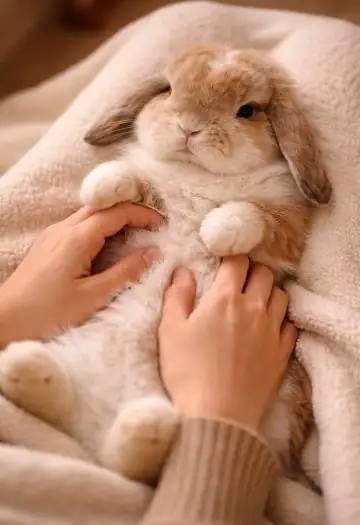
- Gentle belly massage. With your rabbit relaxed on your lap, gently stroke the belly in circular motions. This can help move gas and stimulate gut movement. Stop immediately if they flinch or seem in pain.
- Fresh water in a bowl near them. Hydration is critical during gut slowdowns. Make sure fresh water is easily accessible and close by — not across the enclosure.
- Keep notes. Write down when they last ate, what they ate, the last time you saw droppings, and any other symptoms. Your vet will ask, and having specific times and observations makes diagnosis faster.
🛡️ How I Prevent This From Happening in the First Place
After going through the panic of a lop rabbit not eating several times, I built a prevention routine that has genuinely made a difference. My rabbit’s appetite has been consistently healthy since I started following these habits.
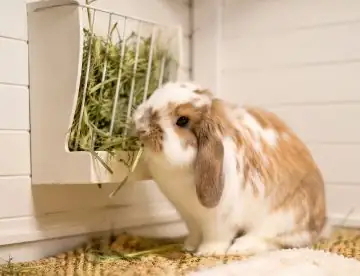
- ✓Unlimited fresh hay at all times — refilled every morning, checked every evening. Never let the rack go empty.
- ✓Weekly health checks — I check eyes, ears, nose, teeth, and droppings every single week. Catching things early is everything.
- ✓Temperature monitoring — I keep a thermometer near my rabbit’s enclosure. If it’s approaching 24°C, I take action before she stops eating.
- ✓Stable routine — same feeding time, same wake-up time, same environment layout. Routine is emotional security for a rabbit.
- ✓Annual vet check-ups — including dental examination. Most dental issues found early are minor. Found late, they’re serious.
- ✓Spaying females early — unspayed female Lops are at very high risk of uterine cancer, which causes appetite loss. Spaying before 18 months is one of the best health decisions you can make.
❓ Frequently Asked Questions
🎯 Final Thoughts: Trust Your Instincts
If there’s one thing I want you to take from this entire guide — it’s this: when your lop rabbit is not eating, your instinct to worry is correct. Don’t talk yourself out of it. Don’t wait until tomorrow to see if it improves.
I’ve seen owners waste crucial hours second-guessing themselves because they didn’t want to “overreact.” And I’ve been one of those owners. The rabbit’s digestive system doesn’t give you the luxury of time that other pets might.
You know your rabbit. You know their normal. The moment something feels off about their eating — take it seriously. Check the droppings. Check the temperature. Check for stress triggers. And if in doubt, call your vet.
That instinct to reach out and find answers? That’s exactly what a good rabbit owner looks like.
Learn How to Care for Your Lop Rabbit
Discover expert-backed guides to help you raise a happy, healthy lop rabbit.
From feeding and behavior to health issues, these beginner-friendly articles cover everything you need to know.
What Can Lop Rabbits Eat?
A complete beginner-friendly feeding guide covering safe foods, toxic foods, and how to build the perfect rabbit diet.
The Best Hay for Lop Rabbits
Learn why hay is the most important part of your rabbit’s diet and how to choose the best type for long-term health.
Lop Rabbit Body Language Guide
Understand what your rabbit is really telling you through posture, ear position, and behavior signals.
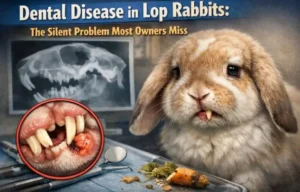
Dental Disease in Lop Rabbits
A critical guide to the silent dental problems many owners miss and how to prevent serious health issues.
- →GI stasis, dental pain, stress, heat, illness, picky eating, and internal pain are the 7 key causes
- →No eating + no droppings for 6+ hours = call your vet
- →Keep room temp between 15–21°C, especially in summer
- →Hay refusal + eating only soft foods = dental check urgently
- →Prevention: unlimited hay, weekly checks, stable routine, annual dental vet visit
Sponsored Link
Learn more about how you can secure your apartment, home, house and security devices made for sure security system.
Learn how to secure your home from burglars

My name is Borni Franklin, and I built LopWorld from scratch — not because I had a background in veterinary science, but because I had a Holland Lop who needed me to figure things out fast.
I came into rabbit ownership the way most people do — excited, underprepared, and Googling everything at midnight. What I found online was mostly generic rabbit content that didn’t speak to Lop-specific needs, didn’t come from a real owner’s experience, and certainly didn’t prepare me for the morning I found my rabbit hunched in the corner with an untouched hay rack.
That frustration is what built this site.